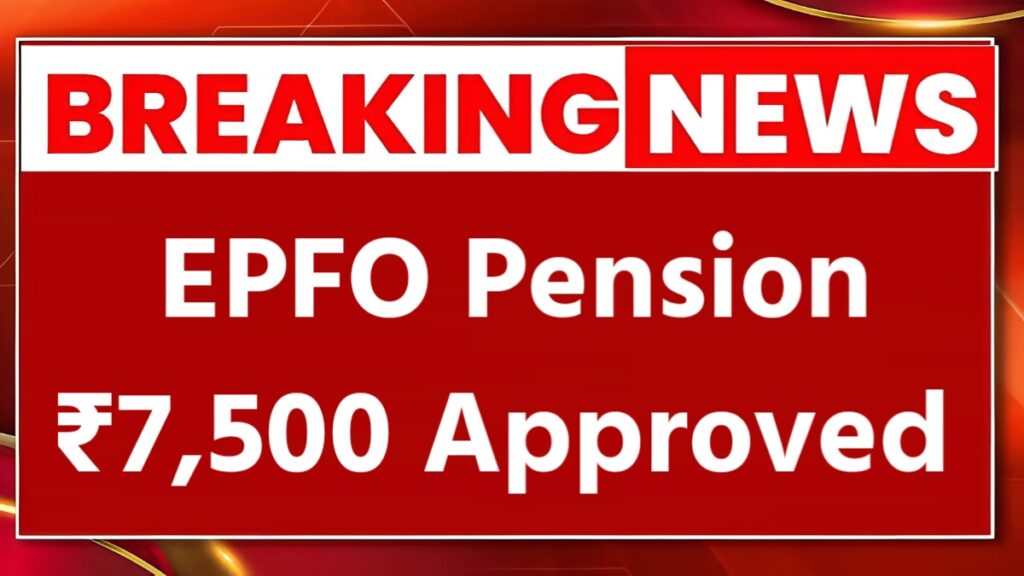
EPFO Pension Hike 2026: The long-debated EPFO Pension Hike 2026 has finally materialised, bringing a substantial change to the Employees’ Pension Scheme (EPS-95). For lakhs of private-sector retirees who have been surviving on a minimum pension of ₹1,000 per month since 2014, the increase to ₹7,500 signals more than a policy tweak — it reflects an overdue recognition of ground realities. The decision also includes a revision in the wage ceiling, a move that could reshape retirement planning for current contributors.
Over the past decade, inflation steadily eroded the value of fixed pensions. Medical expenses rose sharply, urban rents climbed, and household costs multiplied. Despite repeated representations by trade unions and retiree associations, the minimum EPS pension remained unchanged. The 2026 hike therefore stands out not only for the quantum of increase but also for the message it sends — that retirement security in the private sector can no longer remain frozen in time.
Why EPS-95 Was Under Pressure for Reform
The Employees’ Pension Scheme, introduced in 1995, was meant to provide a safety net for organised private-sector workers. However, its structure drew criticism over the years. While employee contributions continued, the defined benefit payout did not keep pace with the cost of living. By 2025, ₹1,000 per month had little practical value. Retirees often depended on family support or informal work to bridge financial gaps.
Economists had warned that stagnant pensions weaken faith in contributory schemes. A pension system that fails to provide dignified post-retirement income risks losing credibility among younger workers. Policy experts frequently pointed out that without periodic revisions or inflation indexing, EPS would struggle to meet its core objective. The 2026 decision appears to be a response to that mounting pressure.

What the ₹7,500 Minimum Pension Means on the Ground
For pensioners living in tier-2 and tier-3 towns, ₹7,500 is not a windfall, but it changes daily arithmetic. It can cover monthly groceries, electricity bills, and part of medical costs. In rural districts, where living expenses are relatively lower, the enhanced amount provides breathing space. Several retiree associations describe the hike as the first meaningful correction in over a decade.
Beyond numbers, there is a psychological shift. “A pension must ensure basic dignity,” says labour policy analyst Ritu Sharma. “When retirees feel they can manage essential expenses independently, it reduces social stress within families.” The EPFO Pension Hike 2026, in that sense, addresses both financial strain and emotional insecurity that had been building for years.
Wage Ceiling Revision and Its Impact on Current Employees
Alongside the pension increase, the revision of the wage ceiling is equally significant. The earlier ceiling of ₹15,000 limited the contribution base, capping eventual pension benefits. With salaries in the organised sector rising steadily, many argued that the outdated cap restricted long-term retirement accumulation. Updating the ceiling aligns the scheme more closely with present-day income structures.

For younger employees, this change could translate into higher future EPS payouts. Employers, too, gain predictability in contribution planning. While higher contributions may slightly increase payroll costs, experts suggest the adjustment strengthens the sustainability of the Employees’ Pension Scheme. It also reduces the risk of sharp corrections in the future, as the fund’s base expands in line with economic growth.
Private vs Government Pensions: Narrowing the Gap
Comparisons between private-sector EPS benefits and government pensions have long fuelled dissatisfaction. Government retirees typically receive indexed pensions and dearness relief adjustments. In contrast, EPS pensioners waited years for even a marginal increase. The 2026 revision does not eliminate disparities, but it narrows them.
Social policy observers note that bridging this gap is essential in a country where private employment forms a major share of organised jobs. A stronger EPFO framework enhances trust among contributors. It reassures workers that their monthly deductions serve a meaningful long-term purpose rather than disappearing into a system that offers negligible returns.
Broader Economic and Political Implications
The timing of the EPFO Pension Hike 2026, ahead of the Union Budget, carries political undertones. Pension reforms often influence public sentiment, particularly among middle-class and lower-middle-class households. By addressing a long-pending demand, policymakers have signalled responsiveness to worker concerns.
From an economic perspective, higher pension payouts could stimulate consumption in smaller towns. Retirees tend to spend on essentials, healthcare, and local services. Increased cash flow at the grassroots level may support local markets. At the same time, the government has emphasised regular actuarial assessments to ensure that expanded benefits do not strain the fund’s long-term viability.
What Could Come Next for EPS and Retirement Policy
While the minimum pension increase is substantial, experts argue that structural reforms should continue. Inflation indexing remains a frequently discussed proposal. Linking EPS payouts to a cost-of-living formula would prevent future erosion. Countries such as the UK and Canada adjust pensions automatically, reducing the need for periodic political intervention.

There is also debate about extending structured retirement benefits to gig and informal workers. With India’s workforce becoming increasingly diverse, retirement policy must evolve accordingly. If the 2026 hike becomes part of a broader reform roadmap, it could mark the beginning of a more comprehensive overhaul of India’s social security architecture.
Disclaimer: This article is intended for general informational and news purposes. Details related to the EPFO Pension Hike 2026, EPS-95 minimum pension revision, and wage ceiling changes are based on publicly available reports and announcements at the time of writing. Official rules, contribution structures, eligibility criteria, and implementation timelines may be subject to change through EPFO notifications or government circulars. Readers are advised to verify information through official EPFO sources or consult financial professionals before making financial or retirement decisions.